Thinking about selling your Hilton Head condo and wondering how to make it stand out? You’re not alone. Between seasonal buyer traffic, HOA rules, and short-term rental requirements, there’s a lot to navigate on the island. The good news: with the right timing, documentation, and presentation, you can create real impact and move confidently toward a strong sale. This guide walks you through the essentials, from legal prep to staging and the best moments to hit the market. Let’s dive in.
Know your rules and documents
Getting your paperwork right up front builds trust and speeds closing. On Hilton Head, buyers and their lenders expect clarity on rentals, taxes, and association rules.
Short-term rental compliance
If your condo has hosted stays under 30 days, the Town requires a short-term rental permit and compliance with operating rules. Review the Town of Hilton Head Island short-term rental ordinance, and gather your permit number, recent Town correspondence, and any inspection or violation history. Buyers want to see that your property is compliant and easy to take over. You can verify requirements on the Town’s site under the short-term rental program: Town of Hilton Head Island short-term rental ordinance.
Pro tip: If you still operate bookings, confirm the responsible agent information is current and that you can coordinate timely on-site responses during showings.
Lodging and accommodations taxes
If you’ve rented your villa short term, organize a simple tax summary. The Town collects an Accommodations Tax and a Beach Preservation Fee that total 3 percent, filed quarterly. Create a table that shows which taxes were collected, which platform (if any) remitted them, your account numbers, and the filing periods. You can find Town details here: Town accommodations tax and Beach Preservation Fee information.
Also review state and county obligations. Different platforms handle taxes differently, so align your records with current rules from the state. For background, see the South Carolina Department of Revenue guidance. If needed, include relevant Beaufort County references in your packet: Beaufort County accommodations tax resources.
Required disclosures and condo addenda
South Carolina requires the Residential Property Condition Disclosure Statement. Complete it truthfully and deliver it early. If anything material changes before closing, update it. For condos, include the association addendum as directed by the state form. You can access the official resources here: SC Residential Property Condition Disclosure Statement.
HOA or POA resale package
Most associations issue a resale or estoppel package that covers dues, assessments, reserves, rental rules, insurance coverage, pending litigation, and transfer fees. Order it as soon as you decide to sell. Turnaround times and fees vary, and delays here can slow closings. For a helpful overview, see this HOA resale or estoppel package checklist.
Time your listing for the island market
Hilton Head is a resort market, so seasonality matters. Visitor traffic and buyer activity often rise in late spring and summer, with many second-home buyers and investors starting their search in late winter or early spring to secure summer bookings. Local broker snapshots show inventory and days on market can shift by property type, so confirm the latest data before you price.
A practical approach is to list 6 to 10 weeks before your preferred closing window. That gives you time to market aggressively, manage showings, and convert interest before peak season. For current trends, review local market snapshots for Hilton Head and ask your agent for a CMA that separates turnkey short-term rental condos from owner-occupied comps.
Build a buyer-ready document set
Make it simple for buyers and lenders to say yes. Assemble these items into a clean digital folder, plus a one-page “Owner Summary” that lists what is included.
- Completed SC Property Condition Disclosure and condo/association addendum
- HOA/POA resale package: CC&Rs, bylaws, budget, reserve study, minutes, estoppel certificate
- STR permit and Town correspondence, including any inspection results
- Tax remittance records: Town, county, state; note which platform auto-remitted
- Rental history packet: occupancy calendar, P&L, platform reports, sample rental agreement, management agreement, cleaning and maintenance logs
- Warranty details and recent service receipts: HVAC, appliances, major repairs; flood insurance summary and claims history if applicable
Having this ready reduces re-inspection requests and protects your value during negotiations.
If your condo has rental history, package income clearly
Investor buyers want to understand seasonality, average daily rate, and net income at a glance. Present your numbers cleanly and professionally.
What to include
- A cleaned, color-coded occupancy calendar with bookings and blocked dates
- A simple P&L summary: gross revenue, fees collected, platform commissions, management fees, taxes remitted, and net operating income
- Sample rental agreement and the property management contract
- House manual and guest rules to show operational standards
- Clear evidence of STR and HOA compliance with permit and policy references. Review the Town program here: Hilton Head STR requirements
How to present
- Start with a one-page Rental Snapshot that shows occupancy percentage, average daily rate, gross revenue, and key expenses. Add an easy-to-read occupancy chart to visualize seasonality.
- Host all documents in a secure data room. Include a QR code in your listing packet so qualified buyers and their agents can access files quickly. Redact guest names and private details.
Showings when you have bookings
Coordinate with your manager to block showable windows. Make sure buyers know about any reservations that will transfer or that might affect closing dates. For in-person tours, confirm the on-island responsible agent is available, since the Town requires responsive point-of-contact coverage for STRs.
Prep the property for impact
Prioritize what buyers see first online, then deliver a turnkey feel in person. On Hilton Head, a coastal maintenance check and thoughtful styling go a long way.
Coastal maintenance essentials
- Deep clean for mildew and salt deposits. Clean glass, sliding doors, and screens. Salt stains jump out in photography.
- Service HVAC and change filters. Provide recent service records. Moisture control matters in a coastal climate.
- Inspect balconies, railings, and thresholds for water intrusion. Tighten hardware and secure fasteners.
- Replace tarnished hardware with corrosion-resistant options. Small swaps read crisp in photos.
- Refresh caulk at windows, doors, showers, and tubs. Clean, bright caulk reduces concerns about water penetration.
These quick fixes reduce the appearance of deferred maintenance and protect your negotiating position.
High-ROI cosmetic updates
- Fresh, neutral paint throughout with consistent trim color
- Update worn flooring. Quality plank or well-finished wood often shows better than tired carpet.
- Modernize cabinet hardware, lighting, and bath fixtures. Modest upgrades can deliver an outsized visual return.
Staging and photography that sell
Staging works. The National Association of Realtors reports that staged homes often spend less time on the market and many agents saw offers 1 to 10 percent higher for staged properties. Review the NAR report on home staging and this NAR 2025 staging snapshot for what buyers notice most.
- Hire a photographer experienced with coastal light. Ask for daylight, twilight, and drone shots if your view or setting warrants it.
- Include a floor plan and a quality virtual tour. Remote buyers are common in resort markets, and these assets can raise the number of qualified showings.
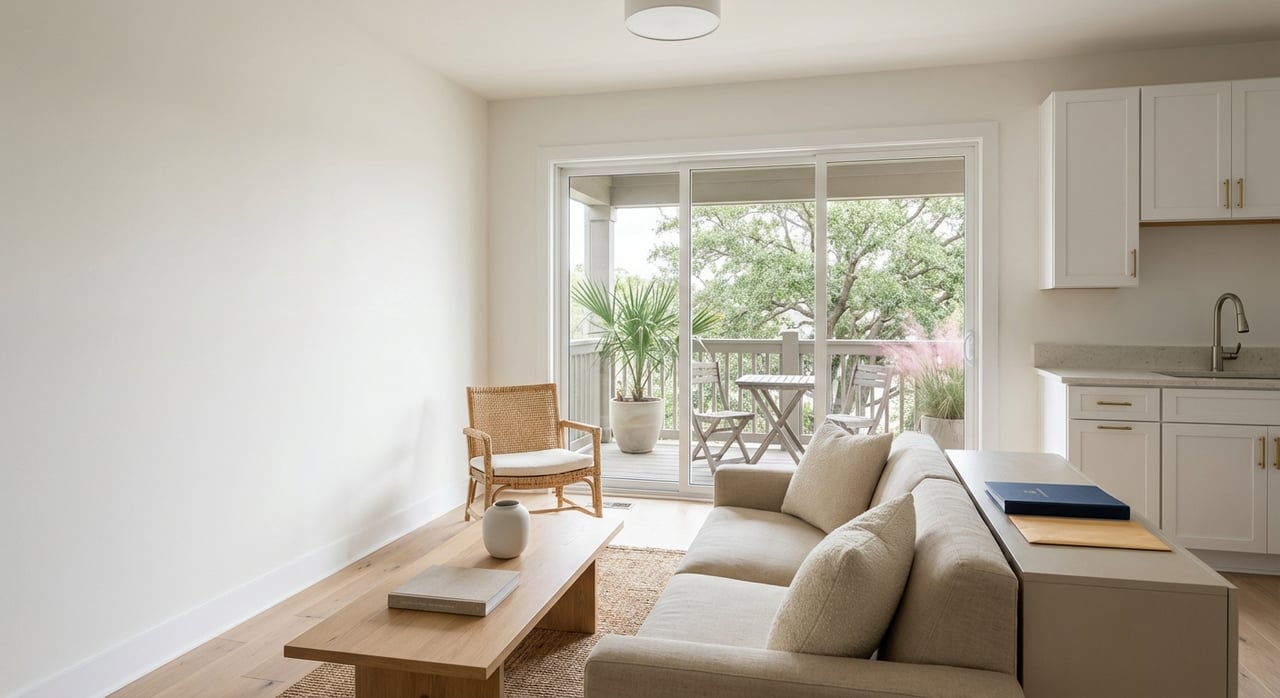
- Stage the living room, the primary bedroom, and any view-facing space like a balcony. These rooms make the most impact online.
Budget guide: expect professional photos in the $200 to $600 range and virtual tours in the $300 to $700 range. A selective staging plan for just the key rooms can elevate the whole property at a lower cost than full-home staging.
Showing strategy, access, and pricing
Decide early whether you will show vacant, owner-occupied, or tenant-occupied. Vacant units are easy to access and photograph well. Light staging can make them feel warm. Occupied units can sell quickly when decluttered and depersonalized.
Check your association’s rules on showings, keys, and signage. Many condo communities have specific procedures. Plan your access strategy before you go live.
For pricing, use a local CMA that separates furnished, turnkey short-term rental condos from owner-occupied units. Factor in how turnkey your property will be for the next owner. Inventory, days on market, and buyer velocity can shift by segment on the island, so anchor your list price to current local signals. For context, see local market snapshots for Hilton Head and adjust with your agent’s data-driven advice.
Your 90-day action plan
A simple timeline keeps your launch smooth and on schedule.
30 to 60 days before listing
- Order the HOA resale or estoppel packet and request STR permit records if applicable. Reference: HOA resale or estoppel package checklist
- Complete the SC Property Condition Disclosure and gather repair and warranty records. Reference: SC disclosure resources
- Book your photographer and request floor plan and virtual tour quotes
- Declutter, deep clean with a focus on mildew and salt removal, service HVAC, and tune up sliding doors and screens
14 to 30 days before listing
- Tackle small cosmetic updates and stage the living room, primary bedroom, and balcony or porch
- Build your digital data room with the occupancy calendar, P&L, HOA docs, taxes, permits, and disclosure
- Draft your Rental Snapshot and a one-page tax summary if you have rental history
Listing week
- Confirm title or escrow contacts and association transfer fees
- Finalize your showing plan and access details with the association or manager
- Launch: publish your professional photos, floor plan, and virtual tour on the MLS and syndication channels
Final thoughts
When you prepare both the paperwork and the presentation, you create momentum. On Hilton Head, that means clean STR and tax records, a complete HOA package, smart timing into the island’s seasonal rhythm, and marketing that captures the coastal lifestyle. Do those well and you give buyers every reason to act.
If you are planning to sell your condo or villa on Hilton Head Island and want a clear plan tailored to your association, location, and goals, connect with Eoin ODriscoll. FOLLOW YOUR DREAM, HOME.
FAQs
What should Hilton Head condo sellers include in a short-term rental packet?
- Provide your STR permit number, Town correspondence, a cleaned occupancy calendar, a 12 to 36 month P&L, sample rental agreement, management contract, and proof of tax remittances.
When is the best time to list a Hilton Head condo for sale?
- Many sellers target late winter or early spring so marketing and showings build into spring and summer. Aim to list 6 to 10 weeks before your desired closing window and adjust based on current local data.
Do I still have to complete South Carolina’s disclosure if I sell as-is?
- Yes. The SC Residential Property Condition Disclosure Statement is required for most sales, and you must update it if material facts change before closing.
What taxes do I need to show if my condo was a vacation rental?
- Document Town accommodations taxes and the Beach Preservation Fee, plus any state and county accommodations or sales taxes. Note which platform auto-remitted and which you filed directly.
How do HOA resale or estoppel packages affect closing timelines?
- Associations set their own fees and turnaround times, and delays can hold up closing. Order the package as soon as you decide to sell and budget for the fee.
Which rooms should I stage in a Hilton Head condo?
- Focus on the living room, primary bedroom, and any view-facing space such as a balcony or porch. These areas have the biggest impact online and in person.